


Listen: the breakdown
Market briefing: Ethereum's on-chain yield has fallen 61% year over year to 2.68%, with almost all of it now coming from issuance rather than real network use. Bitcoin was trading near $63,145 as of 05:20 UTC, holding at medium-term resistance while the crowd stays heavily long.
- Ethereum's total on-chain yield dropped to 2.68% in Q2, down 61% year over year.
- 94% of that yield now comes from issuance, not genuine network activity.
- Real Economic Value rose 7% to $88.4M but sits 68% below year-ago levels.
Ethereum on-chain yield just fell 61% year over year to 2.68%, and almost all of what is left comes from printing new coins, not real use. So who is quietly selling into that?
Ethereum's on-chain yield has collapsed. In Q2 it fell to 2.68%, a 61% drop from a year earlier. That is not a rounding error. That is the network paying holders far less to hold it.
The more revealing number sits underneath. Around 94% of that yield now comes from issuance, meaning freshly printed coins, not from fees paid by people actually using the chain.
Strip out the printing press and the real economy looks thin. Real Economic Value, the fees users genuinely paid, rose 7% quarter over quarter to $88.4 million. A small green shoot.
But that same figure remains 68% below where it stood a year ago. So activity improved slightly against a very weak recent quarter, while still sitting deep in the hole versus 2025.
This is the awkward gap every cycle produces. The narrative says a network is thriving. The fee data says users are not paying much to be there.
None of this triggered a violent move. ETH was near $1,774 as we wrote, barely changed on the day. A muted reaction to soft fundamentals is itself a signal worth reading.
Why weak fees drain real demand
This matters because yield is the honest scorecard for a smart-contract network. It measures what users will actually pay to transact, not what a press release claims.
When 94% of yield comes from issuance, the network is effectively paying holders with dilution rather than with revenue. That is closer to inflation than to earnings.
Reduced fee generation points to reduced fundamental demand for the layer-one itself. Fewer people are bidding for blockspace, so the economic case for holding the asset softens.
That weakness does not stay contained. Ethereum sets the tone for the entire alt complex, because most alts live on it or compete with it for the same speculative capital.
When the leading smart-contract chain shows shrinking real usage, the fundamental floor under the whole risk-on trade thins out. The story can still run on momentum, but the foundation underneath it is quieter.
Here is the transmission chain we care about. Falling on-chain yield signals falling utility. Falling utility weakens the reason to own the asset. That weakness hands smart money a clean fundamental excuse to distribute inventory into buyers who are watching price, not fees.
The REV uptick is real and worth noting. But a 7% quarterly bounce that leaves you 68% below last year is recovery in the way a dead-cat bounce is recovery.
How the weakness spreads across risk assets
Fundamentals like this rarely move price on the day. They set the backdrop that decides who has conviction when the market finally moves.
Bitcoin remains the liquidity anchor. It was trading near $63,145 as of 05:20 UTC, up less than 1% and pinned at what we read as medium-term resistance.
When the market leader stalls at resistance and the second-largest asset shows weakening fundamentals, the setup favours sellers, not buyers. There is no fresh demand story pulling capital in.
Ethereum sits in the middle of the cascade. Soft yield and thin fees give it little independent strength, so it tends to follow Bitcoin down harder and lag it on the way up.
Alts sit at the end of the whip. They carry the least real usage and the most leverage, so they take the sharpest damage when liquidity contracts and risk appetite cools.
The quiet price reaction to genuinely soft data is the tell. It suggests the news is either priced in or being absorbed by steady distribution, with larger players feeding coins to eager buyers.
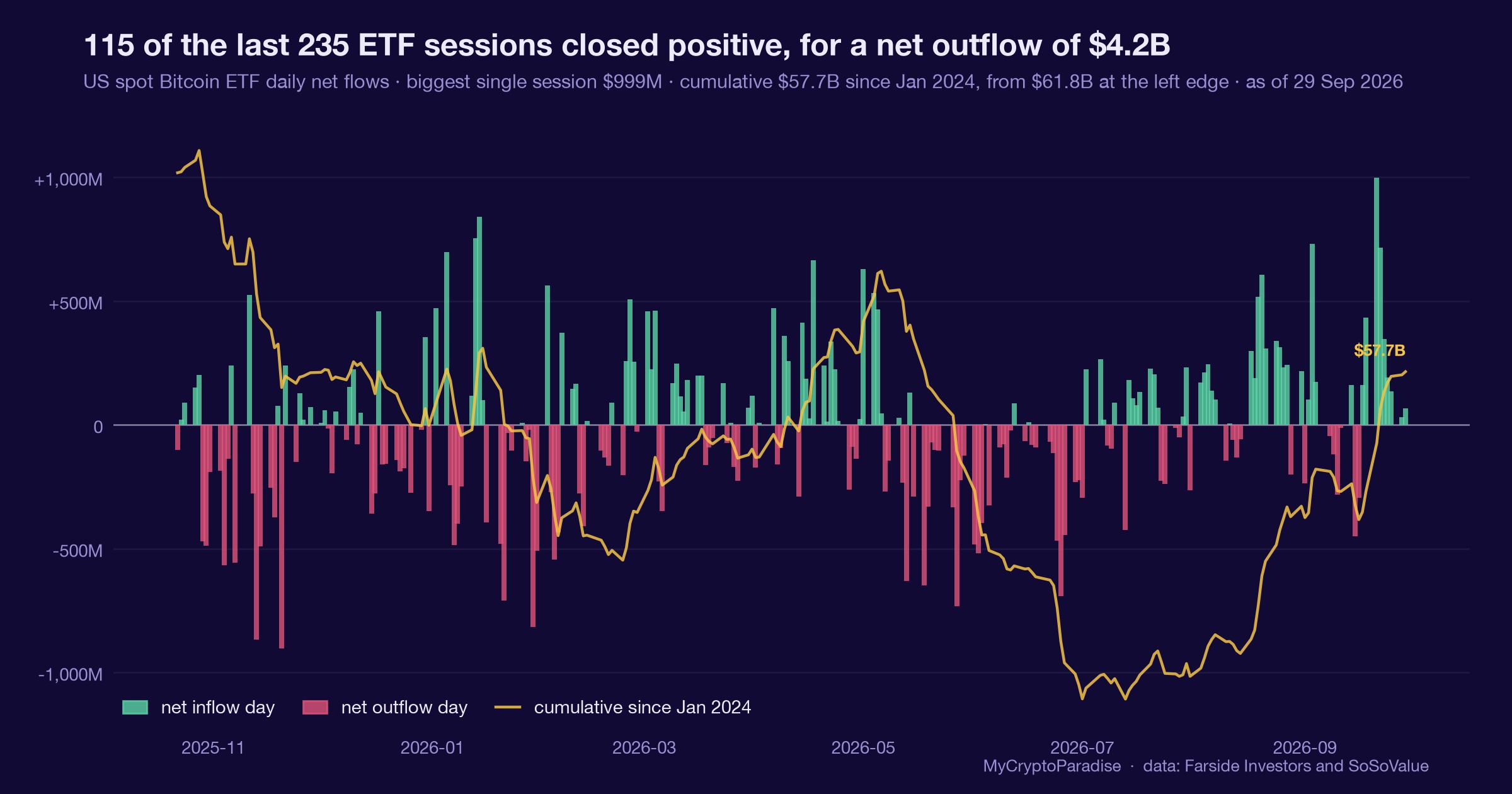
This piece extends our bearish thread today. We have already flagged eighth-week Bitcoin ETF outflows and Binance retreating from France under MiCA. Different stories, same direction of travel: demand is leaking while the crowd stays long.
What confirms or invalidates the downside
The cleanest confirmation would be Ethereum fee generation actually recovering, not just yield from issuance. Watch whether Real Economic Value keeps climbing quarter over quarter and starts closing that 68% gap.
If real fees rebound meaningfully, the fundamental bear case weakens and the distribution read loses force. Honest analysis means naming what would prove us wrong.
On price, the crowd positioning is the thing to watch. The Fear and Greed Index sits near 80 and roughly 78% of the market is positioned long, which is fuel, not a foundation.
Heavy one-sided long positioning is exactly what a downside flush is designed to hunt. Stops and liquidations cluster below, so that is where price tends to travel.
Confirmation of the bearish path looks like Bitcoin rejecting resistance and slicing toward the lower liquidation pocket, dragging ETH and alts with it. That would validate the distribution read.
Invalidation looks like Bitcoin reclaiming resistance on rising volume and open interest resetting from the long side, with ETH fees improving underneath. That combination would flip the tone.
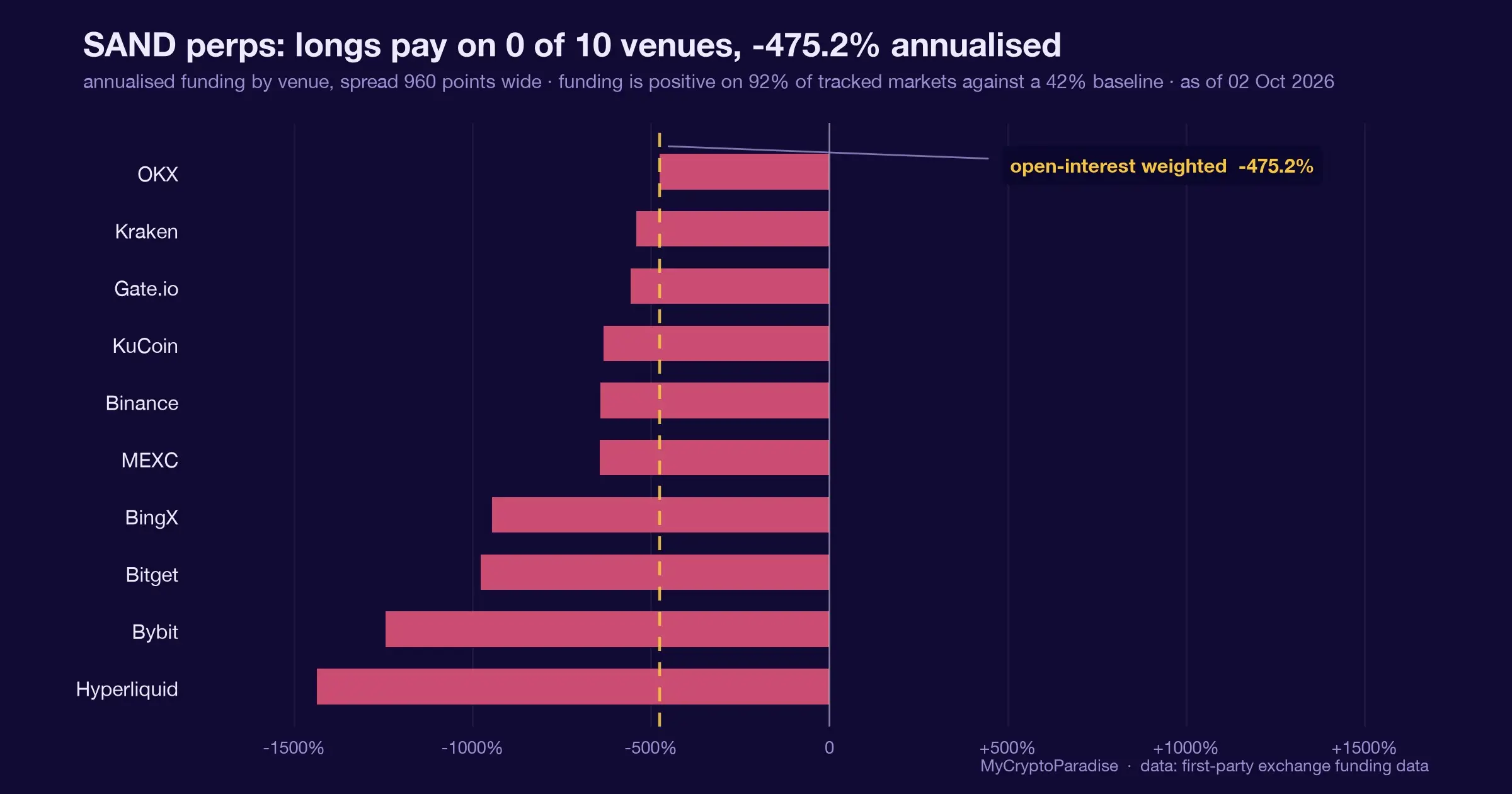
We would treat funding rates, open interest and liquidation clusters as the referees here. When leverage is this crowded, the market usually resolves toward the side holding the most trapped positions.
What thin yield signals about positioning
The ParadiseTeam reads this print through positioning, not panic. Weak Ethereum yield does not force a crash, but it removes a reason to defend risk, and that matters when the crowd is already all-in.
Our working bias stays bearish and medium-term. Bitcoin near $63,145 as of 05:20 UTC is sitting at resistance we do not yet trust, and this soft fundamental backdrop gives smart money cover to distribute rather than chase.
The map we are trading against is simple. Upside liquidity sits near $68,000, downside liquidity near $59,400, and price is coiling between them while momentum fades.
With the crowd roughly 78% long and greed near 80, the heavier pool of stops sits below. A tape that shrugs off genuinely weak yield data usually shrugs because larger hands are feeding supply to buyers.
So the read on this specific event is that thin Ethereum yield reinforces the distribution case, it does not start it. It is one more soft fundamental in a week of soft fundamentals.
What would change our mind is straightforward and worth stating. Bitcoin reclaiming resistance with real volume, open interest resetting lower, and Ethereum fees genuinely recovering would tell us accumulation, not distribution, is running the tape. Until then, we respect the risk of the flush.
For exact entries, targets, and stop losses with full risk management, that is what ParadiseFamilyVIP is for. New to reading these moves? Start with our crypto trading strategies guide.
ParadiseTeam is monitoring the market situation closely, and we are taking these developments into consideration while building our trading tactics inside ParadiseFamilyVIP.
Crypto trading involves substantial risk. Prices are volatile and you can lose money. This article is educational and is not financial advice. Past performance does not guarantee future results.











Join the discussion
No comments yet. Members, share how you are reading this.