Key Highlights
• NYSE partners with Securitize to launch a blockchain-based platform for tokenized stocks and ETFs
• The platform will enable 24/7 trading with full shareholder rights, pending SEC and FINRA approval
Yello Paradisers! Wall Street just took a decisive step toward 24/7 markets. But here’s the real question, are they upgrading the system, or looking to replace it?
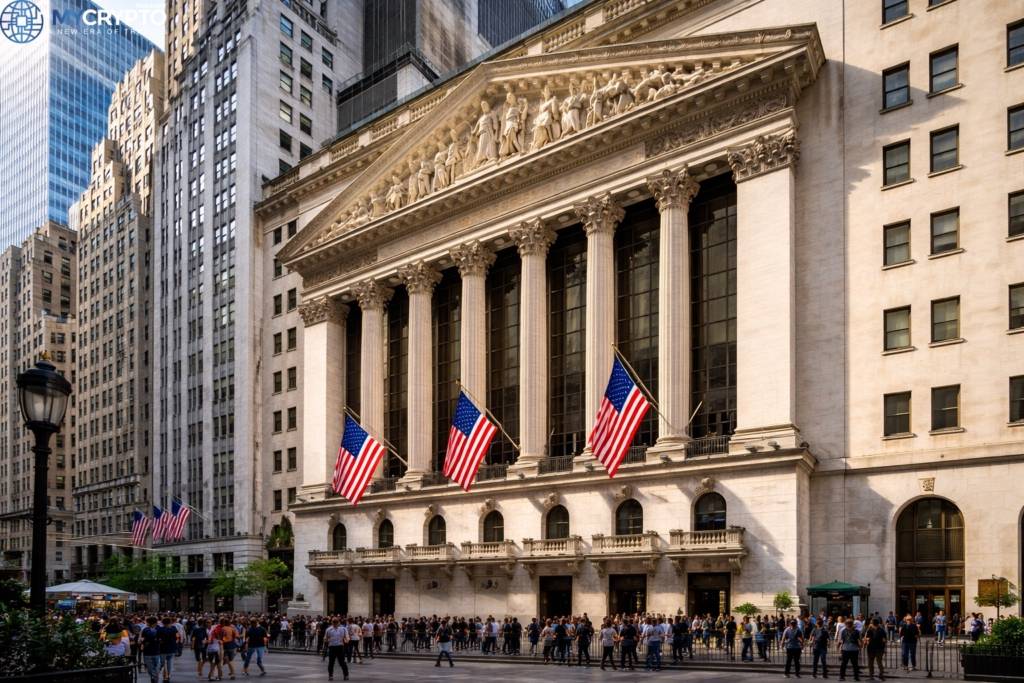
The New York Stock Exchange has signed a memorandum of understanding (MoU) with Securitize to develop a blockchain-powered trading platform for tokenized equities.
Under the agreement, Securitize will act as NYSE’s first digital transfer agent, responsible for minting tokenized versions of stocks and ETFs on the upcoming Digital Trading Platform. This marks a major structural shift, as traditional equities are prepared to exist natively on blockchain infrastructure.
The platform is designed to support round-the-clock trading, instant settlement, stablecoin-based funding, and fractional ownership. Unlike existing crypto-native tokenized stock products, NYSE’s approach aims to preserve full shareholder rights, including voting power and dividend access.
The initiative is backed by Intercontinental Exchange, NYSE’s parent company, and builds on earlier plans to create a dedicated tokenized securities venue. However, the platform remains subject to regulatory approval from the SEC and FINRA, with a tentative rollout expected around late 2026.
Why It Matters
This is not experimentation anymore. This is infrastructure being rebuilt in real time.
Tokenized stocks have existed for years, but mostly as synthetic representations with limited rights. NYSE is attempting something far more ambitious, bringing real equities on-chain without sacrificing legal ownership structures.
If successful, this could eliminate many inefficiencies in traditional markets, from delayed settlement cycles to restricted trading hours.
Or put differently, Wall Street has noticed that crypto never sleeps, and it is starting to feel a little embarrassed by its own closing bell.
Market Impact
The announcement reinforces a broader institutional trend toward tokenization across financial markets.
Traditional exchanges are no longer ignoring blockchain. They are actively integrating it, aiming to compete with crypto-native platforms offering 24/7 access and faster settlement.
This also intensifies competition between major exchanges. Nasdaq is exploring tokenization within existing systems, while NYSE is building an entirely new infrastructure layer.
At the same time, stablecoins gain another real-world use case as a settlement layer, strengthening their role in global financial plumbing.
What to Watch Next
Watch for regulatory signals from the SEC and FINRA, as approval will determine the speed of rollout.
Monitor how competing exchanges like Nasdaq position their own tokenization strategies.
Track institutional adoption of tokenized equities, especially from large asset managers.
Observe whether stablecoins become the default settlement layer for these platforms.
Insights for Traders
Big players are not chasing hype. They are positioning for structural change.
The shift toward tokenized equities suggests that liquidity will increasingly flow between traditional markets and blockchain ecosystems. That creates new arbitrage opportunities, but also new competition.
The second-order effect is simple but powerful. If stocks trade 24/7, capital no longer waits for market open. It moves continuously, just like crypto.
That changes volatility patterns, correlation structures, and liquidity timing across all markets.
For traders, the edge will not come from predicting direction alone. It will come from understanding where liquidity is migrating before it becomes obvious.
ParadiseTeam is monitoring the market situation closely, and we are taking these developments into consideration while building our trading tactics inside ParadiseFamilyVIP.